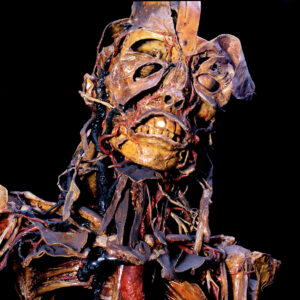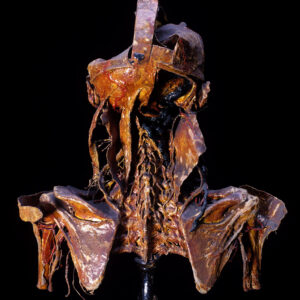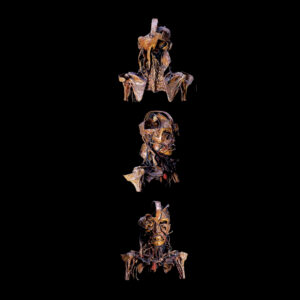
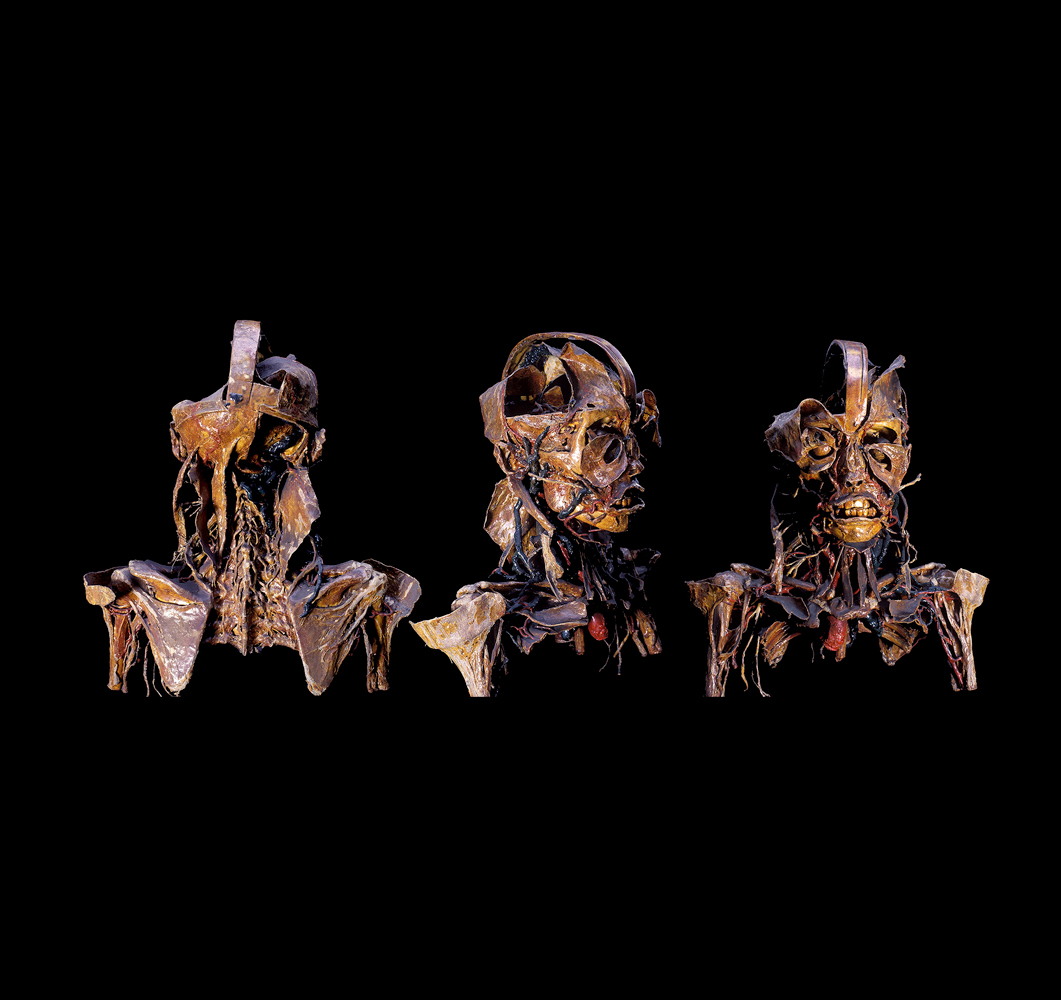
The composition is powerful because it reads almost like a scientific triptych. Each view reveals a different face of the same anatomical mystery. On the left, the head is seen from behind, exposing the neck, shoulders, vessels, membranes, and the opened structure beneath the skull. In the center, the side view shows the cranium cut open, with the skull cap lifted or removed, making the head feel like an architectural chamber. On the right, the frontal view is the most theatrical: the teeth, eye sockets, nasal cavity, and suspended vessels create an intense anatomical portrait.
The repeated form allows us to study the object almost in rotation, as if walking around it in a museum. What becomes striking is the visible cut in the skull — the trepanation or cranial opening — which transforms the head from a closed human form into a revealed structure of bone, tissue, and hidden passages.