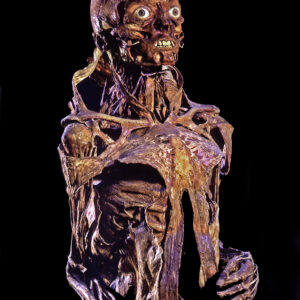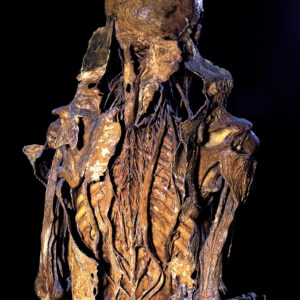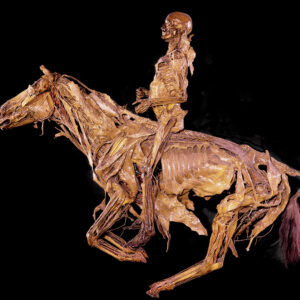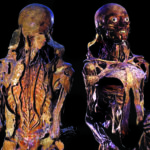
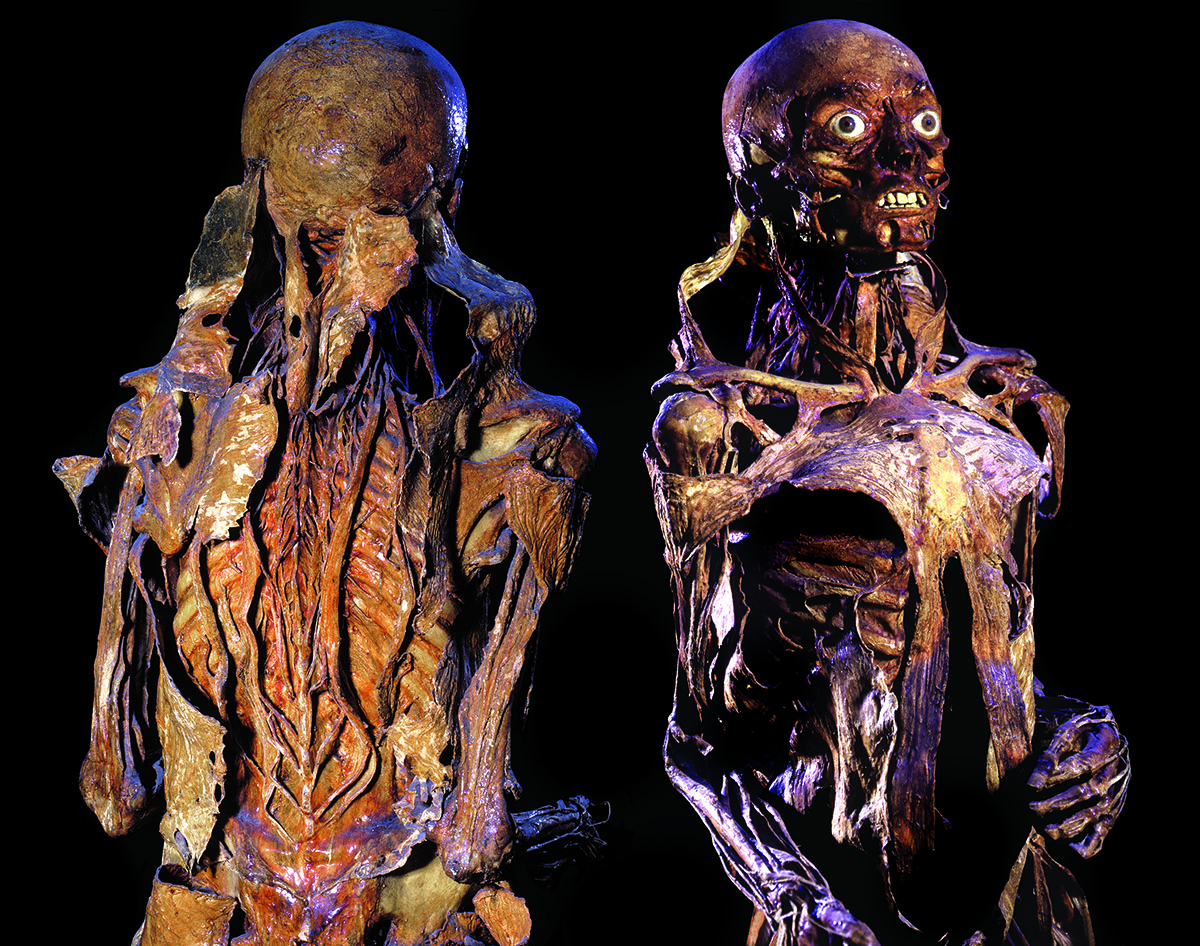
This image presents two close-up views of Fragonard’s anatomical rider, placed side by side against a deep black background.
On the left, the figure is seen from behind. The exposed back reveals a dense, almost tree-like network of nerves, vessels, muscles, and preserved tissues running down the neck and spine. The shoulders and arms hang with a strange sculptural elegance, while the opened body becomes a complex map of anatomy. From this angle, the figure feels less like a portrait and more like an anatomical landscape.
On the right, the rider faces forward. The skull, wide glass eyes, exposed teeth, and opened chest create a startling expression of awareness. The figure seems to stare outward, caught between scientific specimen and theatrical character. The bones of the shoulders and chest form a dramatic frame around the hollow interior of the body, giving the image a powerful architectural quality.
Together, the two views show the double nature of Fragonard’s work: rigorous anatomical study and dark artistic spectacle. The left side reveals the body as structure; the right side reveals the body as presence. It is both medical and mythical, educational and deeply theatrical