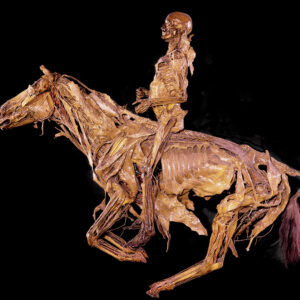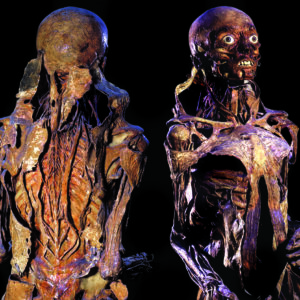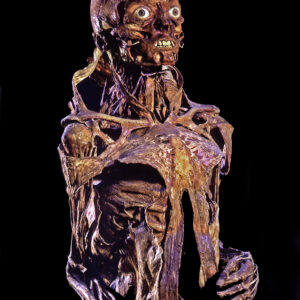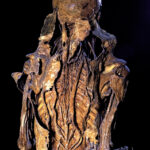
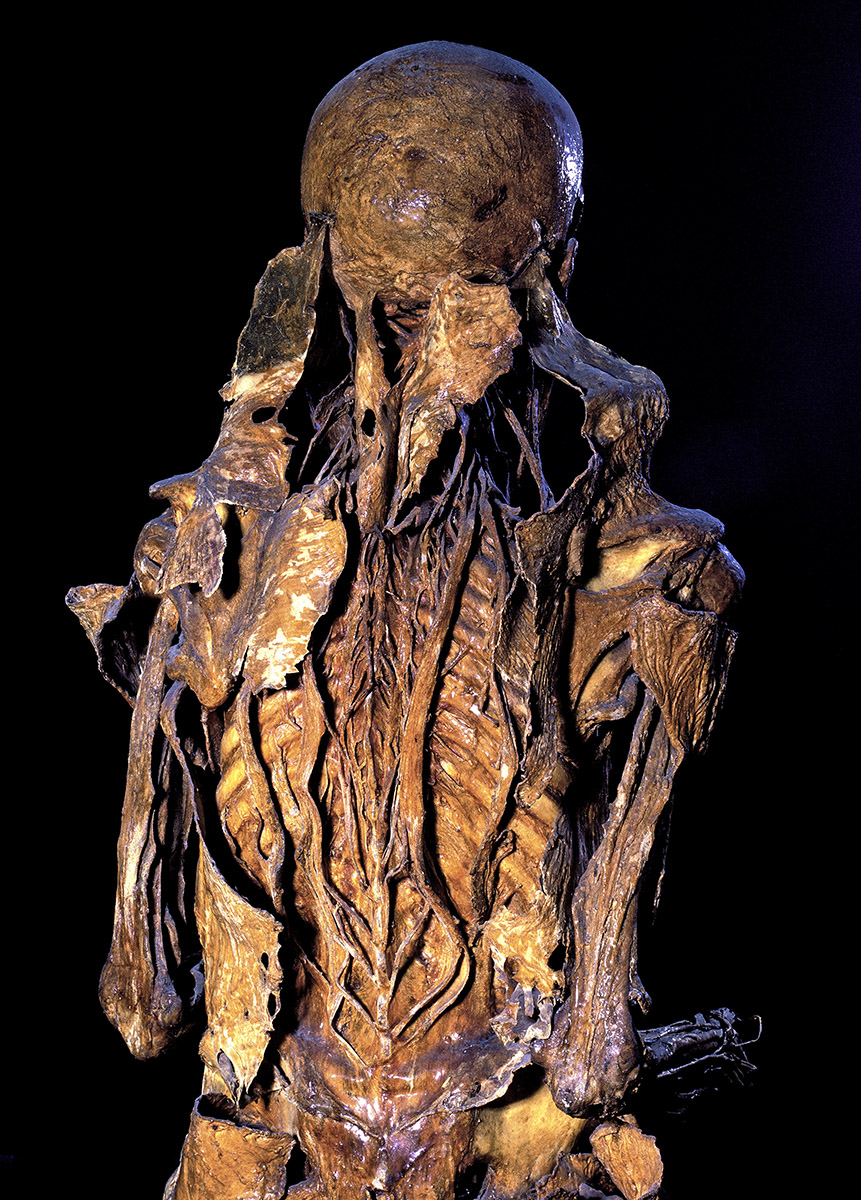
This image shows the back view of The rider of the Apocalypse, dramatically lit against a deep black background. The body appears flayed and dissected, revealing an extraordinary network of muscles, tendons, vessels, and fibrous anatomical structures running from the neck down the spine and across the shoulders.
The head is bowed forward, the skull exposed and darkened by age, giving the figure a haunting, almost tragic presence. Around the neck and upper back, strips of preserved tissue hang like torn fabric, while the shoulders and arms reveal layers of anatomy that feel both scientific and sculptural.
What makes the image powerful is the contrast between precision and decay: the body is no longer alive, yet the preserved structures seem full of movement. The golden-brown tones, glossy surfaces, and dramatic lighting transform the specimen into something between medical artifact, memento mori, and dark baroque sculpture.
It feels ancient, fragile, and strangely majestic — as if anatomy itself has become a form of art.